College Park, Maryland

Anshul Vasmate

First-year computer engineering at the University of Maryland. I make tools for problems I actually have, and I keep going until they work every day on my own machine — not once in a demo.

Bench statusSept 2026
  1. ShortsForge — AI video pipelineRunning
  2. Stock-ranking research engineFinished, negative result
  3. MotionVision — hand-tracked mouseRunning
  4. Desktop agent toolingRunning
  5. Two machines, two hours apartRunning
  6. Business model explainerBuilding
  7. 8-bit CPU from discrete chipsResearched, not built
  8. Booking sites for local shopsSelling

Built and in use

five projects

2026 · Python

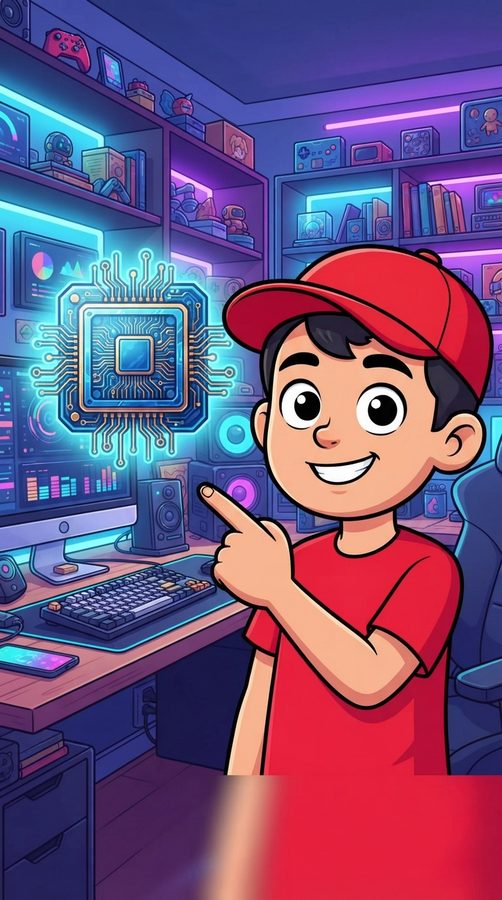
ShortsForge

One command turns a topic into a finished video.

Type a topic. It writes the script, plans the scenes, writes the image prompts, speaks the narration, and cuts the video with captions ready to post.

The language model and the voice both run on my own computer, so a video costs nothing to make and works with the internet off.

The hard part was not generating things, it was stopping the character from changing appearance between scenes. One file now describes the character, and every prompt repeats it word for word.

script + scene enginecharacter-lock prompt systemlocal voice pipelineauto-captioningtwo orchestration agentswhole model stack runs local
Animated frame from a generated Short: a stick figure character in a colour-illustrated scene Second frame from the same generated Short, the character in a different setting Third frame from the same generated Short, closing scene

Three frames from one generated Short. Same character, three scenes — that consistency is the part that took the work.
2026 · Python, scikit-learn

Stock-ranking research engine

The project that failed first, and what I did about it.

Version one tried to predict whether a stock would rise tomorrow. It looked strong in testing, then lost 5.5% on a slice of data I had locked away — while simply buying and holding made 18.6%.

So I wrote down why it failed and rebuilt it to answer a different question: which stocks beat the market average over five days. 128 stocks, 374,365 rows of daily prices, 2,328 versions tested.

This time the edge held up on the locked-away data. It is still not worth trading, because the profit is thinner than the cost of trading — and reporting that is the whole point.

2,328 configurations38 leak checksbeat 40 of 40 random controls
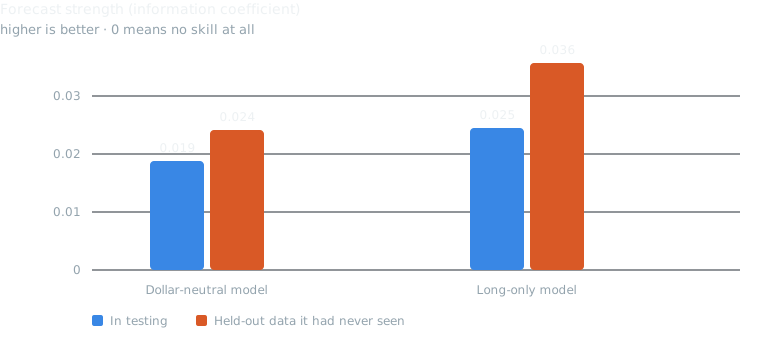
Bar chart: the dollar-neutral model scored 0.019 in testing and 0.024 on held-out data; the long-only model scored 0.025 in testing and 0.036 on held-out data

Both models scored higher on data they had never seen than in testing. That is the opposite of what a model that is fooling itself does.

2026 · OpenCV, MediaPipe

MotionVision

Move the mouse with your hand in front of a webcam.

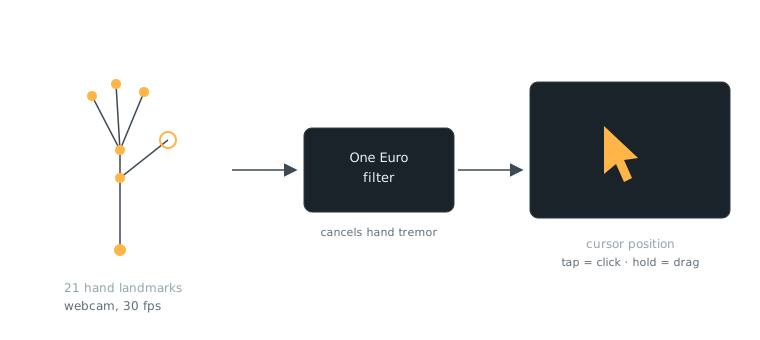
The camera tracks 21 points on your hand. Pinch to click, hold to drag, or record a gesture and bind it to a keystroke, a media key, or an app.

Getting from "works once in a demo" to "works every time" was the entire project: cursor jitter from natural tremor, Windows display scaling, a second monitor, and drags that stuck when the camera dropped a frame.

29 automated tests30 fpsdual-monitor safe
Diagram: hand landmarks from the webcam pass through a One Euro filter and become cursor position on screen

Hand to cursor. The filter in the middle is what makes it usable instead of shaky.

2026 · Python, MCP

Desktop agent tooling

Five small servers that let an AI assistant use my computer.

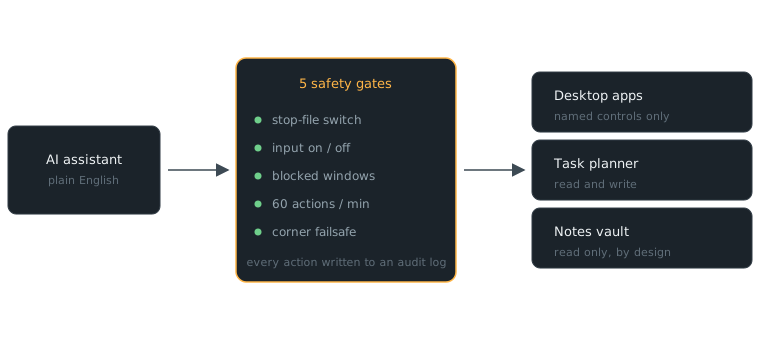
Ask in plain English and it opens the right app, adds a task to my planner, or searches my notes — about thirty separate tools across five servers.

An assistant can be talked into things by whatever text it reads, so I built the limits first: it can only launch apps from a list I approved, it refuses banking and password windows outright, it stops at sixty actions a minute, and it writes down everything it does. A single file on disk kills all input instantly.

30+ tools130+ test assertionsstop-file kill switch
Diagram: requests from an AI assistant pass through five safety gates before reaching desktop apps, the task planner, and the notes vault

Nothing reaches the desktop without passing all five gates first.

2026 · Windows, networking

Two machines, two hours apart

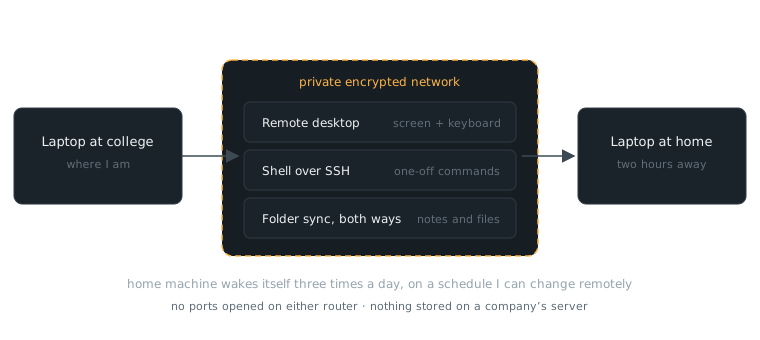
My home laptop, reachable from campus, without opening a single port.

The machine at home sleeps until it wakes itself on a schedule. From campus I can take over its screen, run a command on it, or drop a file in a folder and watch it appear on the other side. The two are joined by a private encrypted network, so nothing is exposed to the open internet and no company holds my files.

Almost none of this worked the first time, and none of the failures printed an error. The machine simply did not wake up, and there was nothing to read.

Waking it took five fixes stacked on top of each other, and four of them were symptoms. The real cause was a second sleep timeout Windows does not show in its settings screens at all — you can only see it by asking the power tool to dump hidden values. It applies specifically when the computer wakes for a scheduled task, and it was putting the machine back to sleep about two minutes after every successful wake. Along the way I also found that the sleep command most of the internet recommends silently turns wake-ups off, because of how its arguments land on the real function underneath.

The lesson I actually keep: when a system fails silently, stop trusting what it displays. My file sync looked perfectly healthy in its own window for ten days while it copied nothing, after an update quietly left it running under a blank identity. Now I check that a real file moved, not that the screen looks fine.

no ports openedwakes on schedule, 3×/dayscreen, shell and file syncfive stacked bugs, one root causeevery failure silent
Diagram: a campus laptop reaches a home laptop over a private encrypted network for remote desktop, SSH and two-way folder sync, with the home machine waking on a schedule

Both machines join a private network of their own. Addresses and keys stay off this page on purpose.

Earlier research

UMES · 2025–2026

Machine learning · TensorFlow

Robotic-arm research

Training a vision model for a robotic-arm project.

At the University of Maryland Eastern Shore, I worked on a machine-learning robotic-arm project under the guidance of UMES students and a professor.

I trained TensorFlow on more than 600 images. It was an ongoing research project during my senior year of high school.

600+ training imagesTensorFlowUMES research

Independent research · LangChain

AI Prompt Generator

Testing how AI could make studying more efficient.

I explored LangChain and ran more than 100 experiments on AI-assisted studying.

The result was a prompt-generator tool that I released to the community, with more than five downloads.

100+ experimentsLangChain5+ community downloads

On the bench now

honest status

Building

Business model explainer

A tool that shows you exactly how a business makes money.

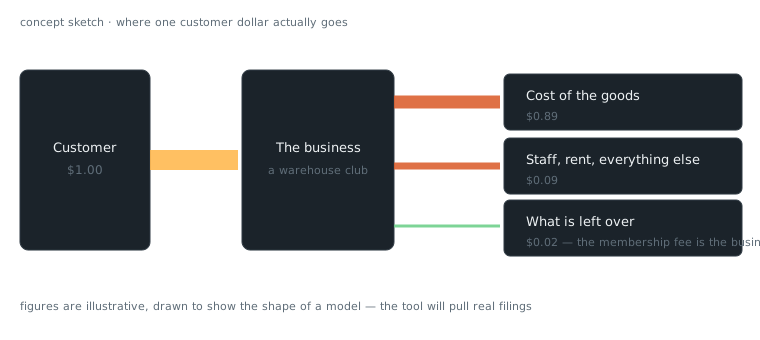
Pick a company and watch one customer dollar move: who pays whom, what the product actually costs, and where the margin is hiding. Change one number and the whole picture moves with it.

I started it because I could repeat that Costco makes its money on memberships rather than groceries, but I could not show anyone why that is true. Saying it is not understanding it.

Where it stands: the model of the data is drawn and the first diagrams work. Next is wiring real published figures in instead of illustrative ones.

diagrams drawnreal filings next
Concept sketch: a customer dollar enters a business and splits into cost of goods, other costs, and the small margin left over

Concept sketch, not a screenshot. Figures shown are illustrative.

Researched, not built

8-bit CPU from discrete chips

A processor built out of individual logic chips, not bought as one.

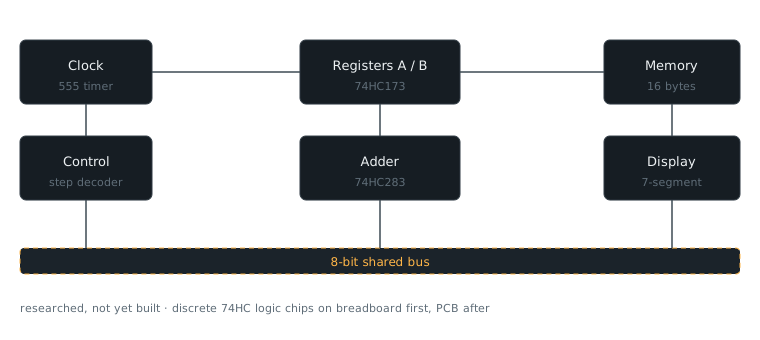
A clock, two registers, an adder, sixteen bytes of memory and a display, wired together on a breadboard and driven by a shared bus — then moved onto a printed board once it runs.

I have done the reading: the datapath, the instruction set, and the parts list. Nothing is wired yet, and I am not going to pretend otherwise. It is the project I most want a workbench and other people's advice for.

architecture chosenparts list draftednothing soldered
Planned CPU block diagram: clock and control driving registers, adder, memory and display over an 8-bit shared bus

The plan on paper. Every block is a chip I can buy for a few dollars.

Selling

Booking sites for local shops

Barbers, salons and restaurants lose appointments to the phone.

The demo on the right is a working app, not a picture of one: real accounts with email verification, a reservation system with live table availability, and an account page where a guest can cancel a booking.

I wrote the attack tests too — for stolen sessions, injected database commands, and cancelling someone else’s reservation. Thirteen of them run on every change and all thirteen pass. One real bug turned up during the build: password-reset links were being built from a header an attacker controls.

The hard part is not the code. I can build the site in a weekend; I have never walked into a barbershop and asked for the sale. That is the part I am trying to get better at.

accounts + reservations13/13 security tests100 accessibility scorepricing model built
Desktop view of a restaurant booking site built as a demo: dark hero image with reservation call to action The same booking site on a phone screen

Crucible, a demo steakhouse — no paying client yet. Node and Express, sign-up through booking, on a phone and a laptop.

How I work

Finish, then use it daily

Six of these run on my machine every day. Real use finds bugs no review does — one stale lock file quietly stopped seven of my apps from opening, with no error at all.

Report the result, not the story

My first trading model lost money on data it had not seen. Writing that down is what made the second one work. A negative result you can trust beats a positive one you cannot.

Build the limits first

Anything that can control a computer gets a kill switch, an allowed list, and a log before it gets features. Safety added afterwards is just a wish.